from Tips For Aging In Place https://www.youtube.com/watch?v=WD4kH6irZ1g
 CES 2020 – walking the land of the new. What has 170,000 attendees, long lines, baffling arrangements of booth numbers across multiple, gigantic locations and more robots than you can shake a motion sensor at? That was CES 2020. This gigantic parade of the international new and possible can be perused online in detail (and perhaps more usefully) without walking a step or sniffing cigar smoke. This time, seen (somewhat) in person, here are 10 new offerings from the show that may be relevant to the older adult technology market. Descriptions are drawn from show booth presentations, sessions, websites, and press releases:
CarePLUS. "Beyond Vision, a startup solution in the form of an AI healthcare product, CarePLUS. Through cameras installed inside the household, the solution can detect the motions and postures of beloved family members with AI and release warning messages at the moment of danger, such as falling, sitting too long, leaving home without a clear reason, etc. Every time an elder is detected to have fallen, sit too long, remain too long in the restroom, leave home at the wrong times, etc., the app will give off an alarm to notify all family members. A user may also open the app interface and see a real-time video of the home's interior." Not yet available. Learn more at Taiwan Tech Arena.
Essence Group Fall Detector Radar. "Essence Group released a new multi-sensor fall detection system for seniors. Built on Texas Instrument radar technology, the API works with Essence's Care@Home senior monitoring platform, which places integrated devices and wearables around the home to track physical activity, safety, and physical or verbal panic. The new product uses radar (mmWave) technology to track a person's position in the home, provide immediate detection of a fall, and immediately alert healthcare providers. Not yet available. Learn more from Essence Group." Learn more from Essence Group.
HeardThat. HeardThat "turns a smartphone into a hearing assistant, helping to tune out background noise to enable individuals with hearing loss to hear speech more clearly, allowing them to engage in conversations they would otherwise have trouble hearing." HeardThat reportedly utilizes 'advanced machine learning machine algorithms' to separate speech from noise. According to the company, “it listens to the noisy environment and delivers de-noised speech, to the individual’s Bluetooth-enabled hearing aid or other listening devices via their smartphone." Not yet available. Learn more from video.
HomeFit AR. "HomeFit AR is an augmented reality app created from the solutions in the AARP HomeFit Guide. The app enables users to scan a room and discover what improvements can be made to turn where they live into a 'lifelong home.' The app identifies design elements and appliances like refrigerators, sinks and stairs then provide additional information with specific “to-dos” or fixes to help make the home safer, more comfortable and a great fit." Learn more at AARP Innovation Labs.
Houndify DeepMeaning Understanding. "SoundHound offered up new features for in-car radio, including the ability to: “Ask multiple questions and filter results all at once. Answers your most complex questions anywhere: on any connected device, app, or website — at home or on the go. For example, users can say “show me hotels in San Francisco for tomorrow that are less than $300 but not less than $200, are pet friendly, have a gym and a pool, with 3 or 4 stars, staying for 2 nights, and don't include anything that doesn't have Wi-Fi." Learn more from Houndify.
Kytera Companion. "Kytera Companion is an AI-based smart remote caregiver solution that enables elders to age safely at home. Based on innovative monitoring and analysis technology, the solution provides insight into elders’ activity at an unprecedented resolution, and enables for the first time automatic and reliable detection of both hard and soft falls (soft falls account for the majority of falls at elders, and so far, there has been no technology that enables their detection). Using AI, the solution further provides comprehensive wellness monitoring to automatically detect physical and mental deterioration, as well as predict evolving disease conditions (such as depression, dementia and UTI) based on behavioral symptoms." Learn more at Kytera.
MedWand. "MedWand fulfills the potential of telemedicine. Created by physicians and medical device engineers, MedWand houses multiple diagnostic tools in a single, easy-to-use handheld device. With a MedWand on the patient's side, clinicians can conduct remote office visits, and through the real-time collection of multiple vital sign readings and key patient assessments, detect and follow numerous medical conditions from across town, or around the world." Learn more at MedWand.
OrCam Hear. "OrCam Hear is an artificial intelligence-powered hearing aid that combines lip reading with simultaneous voice source separation. The device is the size of a finger, wireless, lightweight, and hands-free. It works by identifying, isolating, and relaying a specific voice to hearing aids via Bluetooth. OrCam Hear works with body movement to select the person the user wants to hear, and switches between speakers by responding to the repositioning of the wearer. All operation is processed offline – without the need of Wi-Fi or a smartphone while ensuring data privacy." Not in market yet. Learn more at OrCam.
Pecola. "PECOLA is a companion robot incorporating ambient intelligence for the elderly. By collecting and analyzing users’ life and physiological data, this innovation can detect abnormal behaviors of elders and thus achieve preventive healthcare. The robot, which follows its user around the home, can detect emotions, perform video-based diet analysis and conduct sleep analysis by detecting breathing and heart rate, according to a product fact sheet. The robot automatically provides daily reports on these activities to the user’s caregiver. The robot uses video-based fall detection technology and will phone for assistance.” Not yet available. Learn more at ITRI.
Zibrio. "The Zibrio SmartScale enables home users to measure and track their balance, with a particular focus on the aging population. The Zibrio SmartScale measures balance with a simple, safe, 60-second test. The user stands still on the SmartScale for 60 seconds with their eyes open, and the SmartScale gives them a balance score from 1-10. A lower score is associated with an increased risk of falling in adults age 65+. Upon completion of the balance test, the platform displays the balance score and lights up red, yellow, or green to communicate the score’s fall-risk level (high, medium, low)." Winner of AARP Innovation Pitch Event. Learn more at Zibrio.
[Note: Please see latest research report, Voice, Health and Wellbeing 2020 -- published during CES -- about the use of Voice First technology in healthcare offerings]

 Change is ahead, perhaps sooner than we think. One of the more striking aspects of the flood of Voice First innovations is the near-feverish pace – predictions turn into practice faster than a device can say “Hello.” Below are just a few of the possibilities that by next year at this time will be, so to speak, yesterday’s news. By then, thorny questions about privacy, personalization, and patient-doctor voice communication will be closer to resolution. Perhaps doctors will no longer save notes for evening if they can enter them by speaking during or just after the appointment. And in five years, perhaps scribes will not be required. Consider:
[Excerpt from Voice, Health and Wellbeing 2020 report published in January 2020.]
 Voice First -- The year began and ended with speaking. And shouting. Strolling is not the right word, but as we approached the Las Vegas Convention Center last January, Google Assistant was on giant billboards all around – with competing and nearby giant Amazon Alexa signs. We are attending again this year – and I cannot imagine what is left to say, so to speak. But I am sure the blaring will begin at the door. Here are the most read blog posts from 2019. Happy New Year – and onward to 2020, the publication of the now-completed Voice, Health and Wellbeing 2020 on Monday, January 6th, and so many more (and counted) CES steps -- more wearables, virtual experiences, smart and not-so-smart speakers. See you there!
Ten Technology Offerings from CES 2019 – Beyond Gadgets. Bright Lights, thick smoke, constant walking and avoidance maneuvers. After taking a year or two off, returning to CES is a chore and a revelation – it clearly is the major event for new technology announcements. Gadgets, yes, too many smart wearables, including underwear, too many near misses of being run over by gangs of oblivious young guys staring at their phones. If there was a key trend in all of this racket, Sleep has become a tech obsession, the uptake of Digital Health is almost here, new variants of companions and assistants were pervasive, including Google Assistant inside everything ad Amazon voice devices everywhere. Read more.
Real seniors lack essential technology. When Pew stops tracking senior adoption, does that imply a market saturated? Note this Fact Tank aggregation of technology adoption statistics (tech overall among seniors, last reported in 2016) – and the most recent data cited on Internet use, seniors were quoted in a 2016 survey, 44% of responders did not use the internet. Of those that do, older adults aged 65+ said they had little to no confidence in their ability to use electronic devices to perform online tasks. Let’s think about their non-confidence (not broken down into the 65-74) and the 75+ who are the Real Seniors. Read more.
The Apple Watch and fall detection -- what about it? When Apple speaks, a puzzled market listens. When Apple announces, industries crane their necks to hear. Last week they announced two features of a new watch, ECG monitoring and fall detection. In July, Tim Cook apparently did not want to get into the world of FDA regulation. Well, that was then – or he just wasn’t saying. In this new watch, both the ECG feature and fall detection have received FDA clearance within 30 days of applying, startling some observers who noted that closer to 150 days was more typical for a medical device. Healthcare observers are concerned that false positives from ECG readings could propel people unnecessarily to already-overloaded Emergency Rooms. To date, the Apple Watch may have been of greatest interest to 40 year old males. Interestingly, 70% of cases of atrial fibrillation are among the 65+ population. Does Apple really want the 65+ population to buy an Apple watch? Read more.
Whatever happened to Tech-Enabled homecare? Past venture capital investment in home care boggles the mind. It seems only yesterday that Tech-Enabled Home Care was published – with that wonderful Forbes graphic "Why VCs Care More About Home Care." The Forbes article noted the $200 million invested just in 2016 -- with big money that year putting $60M into ClearCare, $46 million into Care.com and $42 million into Honor as next in line. The VCs cared, all right – if that money was an indicator. But were they smart? Did they change the dynamics of the home care industry? With smaller investment that year, it's good to see that Envoy (concierge service for independent living), Kindly Care (home care agency), Caremerge (home care platform), and Seniorlink (care coordination) are in their same businesses from 2016 – and others from the period like Envoy and CareLinx received additional investment and moved forward. What happened to other Forbes rock stars? Read more.
Fall Detection -- the more things change…Who would have thought that fall detection would be added to a hearing aid? Or that Apple would produce a watch with built-in fall detection, automatically activated for the 65+? A decade ago, before our very first Market Overview, Halo Monitoring launched a wearable fall detection chest strap, realizing the press-the-button PERS devices might not be enough to keep older adults safe – what if they weren’t wearing it? That dilemma, of course, has helped drive some innovation in the medical alert industry, estimated at $3 billion annual revenue. In fact, MobileHelp, one of the first mobile PERS devices, acquired Halo Monitoring in 2012 – a good move for both, especially since by 2012, it was clear that fall detection by itself was not yet a market category hit. Read more.
Five Fintech Offerings for Older Adults. FinTech – are these tools for seniors? Some trendy terminology transformations in recent years, for example Voice First and IoT, refer to tech that is relatively new or recently revived. FinTech, a concatenation of Financial Technology, may be similar. The category has been generally described as software "designed to be a threat to, challenge, and eventually usurp entrenched traditional financial services providers with the purpose of being more nimble and serving an underserved segment, or providing faster, better service." The next quote sounds a bit ageist, if likely true: "As for consumers, as with most technology, the younger you are the more likely it will be that you are aware of and can accurately describe what FinTech is." Looking at a list of top FinTech companies, one might laugh at a company called Robinhood. Don't laugh, though. Charmingly named, Robinhood, which offers free stock trades, is worth $5.6 billion and has more accounts today than eTrade. Read more.
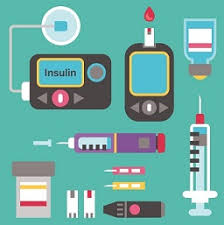 Diabetes is a critical health problem. More than 30 million Americans have diabetes – but 23 million of them, according to the CDC, are undiagnosed. Today, the obesity rate for adults 60 and over has risen to 41%. It is estimated that 30% of the overweight adults have diabetes – and most diabetics are overweight. Another third of the adult population has pre-diabetes – including 23 million of the 65+. A survey of technology offerings reveals a plethora of apps and information sites, not to mention devices that are part of the diabetes management equation. So what technologies are viewed as useful for the millions with diabetes? Here is a sampling:
Apps: Nutrition tracking apps for monitoring diet and blood sugar (from Healthline) include Glucose Buddy, DiabetesConnect, and SugarSense. Health2Sync (‘round the clock diabetes care’ provides a logging tool as well as encouragement. In addition, apps that help educate individuals with diabetes include Fooducate, which explains the sugar and carb content of various foods. The tracking of blood sugar has been gamified in MySugr, which has at least 1 million users in 52 countries.)
Information sites: Healthline also offers a list of the best diabetes blogs (curated) of 2019 and another blogsite that aggregates a longer list. List of ‘hand-picked’ diabetes websites noted in Diabetes Gourmet Magazine, and information sites from Johns Hopkins (Guide to Diabetes) and the American Diabetes Association website.
Coaching: Numerous websites offer online, remote coaching – like Omada Health, Diabetes Strong personal coaching, Integrated Diabetes Services, and reversing Type 2 Diabetes (Verta) and studies that demonstrate reversal, even without weight loss.
About Glucometers: Comparing glucometers from AgaMatrix, MPR, Top 10 Reviews and an article that questions the accuracy of 18 different glucometers, as well as a scientific article that recommends the standard for accuracy (error threshold) be revised.
Continuous Glucose Monitors (CGMs): Beginning in 2016, the FDA began approving Continuous Glucose Monitors. According to Managed Care: “Continuous glucose monitors have sensors placed either on the arm or abdomen that read glucose levels in the cellular fluid just under the skin. The sensors, ranging in size from a penny to a stack of two quarters, are held in place with adhesives. A tiny needle built into the sensors is pushed into the skin.” By 2018, had approved Dexcom’s G5 Continuous Glucose Monitor, Abbott’s FreeStyle Libre CGM, Medtronic’s Guardian Connect, and Dexcom’s G6. These were followed by Eversense in 2018 and Senseonics in 2019.
Smartphone accessories: Combining glucometer with iPhone case (Glu), iOS smartphone accessories/gadgets and the Dario smartphone meter toolkit (iPhone and Android). There are also a variety of Medic alert offerings for Type 1 diabetics.
Managing medication adherence. As many as 50% of those with diabetes do not take adequate medication to manage their blood sugar, accounting for $24.6 billion in avoidable healthcare costs. Although some would say that Americans take too many pills, for many, medication is critical to health and wellbeing—especially diabetics. For those taking pills for managing Type 2 diabetes, locking medication containers from MedMinder Pharmacy or Philips may be useful.
Data-driven diabetes care: Smartphone synching of readings with clinical content and support systems – can used as research tools and ways to improve care (Novo Nordisk, IBM Watson/Medtronic, Glooko).
Innovators in Diabetes Technology mid-year 2019: Low-cost Continuous Glucose Monitoring (see #5), Digital Skin Patches (Nemaura), smart insulin pens (Gocap and InPen, NovoPen (NovoNordisk) disposable pre-filled injection pens and by November, 2019, sensor-augmented pumps from Tandem and Medtronic, the Omnipad DASH continuous insulin pump, the Tidepool Loop (development initiated by diabetes patients).
 The second year of the Summit tackled issues in town and far away. In the portfolio of the 2019 events produced by Mary Furlong and Associates, the Washington Innovations in Longevity Summit is relatively new, in its second year. But it is unique in its objectives – topics spanned the regulatory environment and included insights and innovations outside of the US. The event capitalizes on the presence of numerous Washington government agencies, including National Institute on Aging and HHS, as well as representation from DC-based organizations like NCOA and AARP. This event was keynoted by AARP’s Executive VP Nancy LeaMond and George Vrandenburg, Chairman of UsAgainstAlzheimer’s. Here are five of the technologies that were presented and discussed at the event:
Audio Cardio. "Our patented and clinically proven Threshold Sound Conditioning™ technology generates personalized audio therapies to help stimulate and strengthen your cells. AudioCardio™ quickly assesses your hearing and delivers a once a day, one hour hearing therapy for your ears. TSC™ technology detects the key frequencies that have lost sensitivity (commonly due to noise exposure and aging) and exercises them with personalized sound signals." Learn more at Audio Cardio.
Camanio Care. "Camanio Care is a care tech company that develops innovative solutions for a good care at home with the individual in focus. Camanio Care offers digital service platforms for digital care, robotics, assistive devices and gamification, with products such as Camanio Smart Care, BikeAround™, Bestic® and Giraff™. Through three focus areas; Active Life Mealtime and Digital care, Camanio Care wishes to support people's basic needs and increase accessibility and quality within health care." Learn more at Camanio Care.
Megilla. "Megilla is an online video-storytelling platform where you can tell your life story on video - one question at a time.Basically, you need a computer or device with camera / audio capability -- then you can record videos from your devices by answering questions and talking into your camera. Click “record now” and tell your story. If you see a question you like but want to answer later, click “save to my list” and it will be saved in a ‘shopping cart’ of sorts under “My List” you can access anytime. If you want to share any videos with someone, you can email those videos directly from the site without creating an additional email account." Learn more at Megilla.
Outpatient. "Outpatient is a mobile app for patients and their families to coordinate logistics, communicate and adhere to care plans. Outpatient Inc is a venture-backed startup that's building a platform to help families and patients manage their healthcare in a modern and unique way. We're experimenting with messaging, NLP and machine learning to radically improve the overwhelming logistics of health care. To the family - We understand your challenge, the numerous decisions you have to make while also managing the rest of your life. Outpatient is here to simplify your world. To the medical provider - Outpatient translates to improved efficiency, higher reported satisfaction and greater adherence to your care plan." Learn more at Getoutpatient.
TCare Inc. "Tailored Caregiver Assessment and Referral (TCARE) is a care management protocol designed to support family members who are providing care to adults, of any age, with chronic or acute health conditions. The comprehensive system includes software, assessment tools, decision algorithms, and a training and technical assistance program. TCARE is grounded in the Caregiver Identity Theory, which conceptualizes caregiving as a series of transitions that result from changes in the caregiving context and in personal norms that are grounded in familial roles and culture. Learn more at TCare.
 Is the healthcare consumer ready for voice assistants? Not quite. There is a technology overhaul underway – the biggest change in user experience since the introduction of the web browser in 1991. Voice First technology – the ability to use natural language to speak to and be spoken to by devices and software – has become at least one mandatory user interface in every business and consumer interaction. From Voice recognition technology to Smart Speakers to Voice Assistants, it is now pervasive – in the year 2020, 50% of all searches will be by voice. From a sheer quantity standpoint, the plethora of devices from Amazon (claiming sales of 100 million gadgets at the end of 2018, plus a dozen new ones introduced for the 2019 holiday sales period) captures the stampede nature of the market. However, by end of January, 2019, Google claimed to have Google Assistant running on 1 billion devices – and by the summer, began declaring a new version – Google Assistant 2.0.
Optimism in the healthcare ecosystem remains high.... By 2016, experiments inside the hospital ecosystem were beginning – KidsMD launched at Children’s Hospital in Boston, a pioneering Alexa skill to help patients and families with generalized wellness advice. Amazon’s release of HIPAA compliance tools has made personalizing the interaction feasible. Improving patient satisfaction and boosting staff efficiency driver of deployment in hospitals. Providence St. Joseph Health has an Alexa skill to book same day appointments. One of the earliest Voice/Healthcare innovators, Orbita, recently launched Orbita Assist acts like a call button, using voice for connecting patients to the nurse’s station. And multiple hospitals are adding voice skills to improve patient engagement, provide post-discharge instructions. One significant use may be in transcription of physicians’ notes and orders – eliminating the evenings spent typing into an EHR system to catch up from the day – and ideally reducing physician burnout.
The healthcare consumer isn't ready -- and it’s a good thing – Voice Assistants aren’t either. According to research by Voicebot.ai, consumers are somewhat interested in using voice assistants to answer questions of their various voice assistants. Although 51% indicated an interest in using a voice assistant in a healthcare use case, 92% had not done so – yet. In MedTech Boston research performed by Dr. Matt Cybulsky, PhD and Bradley Metrock, the researches created a measurement called “VHI – The Voice of Healthcare Index.” It was computed based on the percentage of 300 health-related queries that Alexa, Google Assistant, Siri, Cortana, Bixby and Hound (from SoundHound) were able to recognize. Question categories included: Illegal drugs, legal drugs, medical centers, healthcare companies, isolation and symptoms/pathology. Although Google Assistant was deemed as the Voice Assistant “most ready” as of March, 2019, all needed improvement. All were stuck on location-specific responses – if you are in location A, want the best hospital by specialty, best must be ‘nearest’, regardless of whether they are viewed as ‘best’ by any measure.
[More to follow in January 2020]
