
Thursday, July 5, 2018

Four Blog Posts (and concerns) That You May have Missed

Considering the dog days of summer.  Dog days – these are the hottest days of summer, according to that Oracle of modern culture, Wikipedia.  As the glow and racket from fireworks fade, it's time to mull over the thoughts that zipped by in recent months, perhaps not noticed, but are worth another consideration.  All four of these posts are about our technology life, as shoppers in stores as recently as July 1, our experience with user interfaces that are designed for none, catching up on the hype/hope/fading hope about self-driving cars, and finally, the only thing that can terrorize a company the size of Walmart – Jeff Bezos and Amazon. Here are four blog posts to take a look at in this sleepy week:

Time to Worry about Your Data.  The irony, the irony – everyone saw Europe’s data privacy initiatives.  Why has this taken so long here? In a word – lobbying. The congressional hearing droned on, and Mark Zuckerberg tried so hard not to sound condescending towards his techno-light questioners about the so-called ‘Facebook Scandal.’ Which could have been the Google scandal, the Twitter scandal, or eve Amazon -- consolidation of industry players and using the data to sell them (or make ads ‘more effective’) or as with Amazon, sell them more stuff. The real scandal? Not the Cambridge Analytica role, which didn’t exactly sneak around in the long-time and paid analysis of Facebook data. The real scandal might be last year's $30 million of lobbying spent to avoid controls (and user protection) actions like those considered and in process in Europe.

Technology Designed for All.  A long time ago (7 years this month) in a tech world far, far away, a report sponsored by AARP predicted that technology change would deliver a new user experience. The concept was referred to as "Technology Design for All" -- defined as 'User experiences that appeal to all age groups, persisting across versions and devices.'  According to the report Connected Living for Social Aging, which was published 7 years ago this month, the future was predicted. It is worth a look back -- note that it did happen just as described. Consider smart speakers (the Echo was launched in 2014), IoT boxes, phones, tablets, PCs, Macs and all cloud-based software.   These work without the need to download and upgrade on Patch Tuesday, though fixing privacy is the next big technology hurdle. 

Are we really ready for self-driving cars? In a taxi in DC – the driver wends his way around buses and pedestrians.  It’s the day after the self-driving car killed a pedestrian. The next day, you can find scores of link references to a police comment that the car was likely not at fault though no investigation has completed – or even been started. In another tech publication (“Big Think – your daily micro-dose of genius”), you can read that in over 1.5 million miles of testing, one year ago was the first time the car had been at fault when it crashed with a bus. Really? How does the writer know this? Because Google says it was a ‘misunderstanding in the car’s software and from now on, the car will understand that large vehicles and buses will be less likely to yield.’
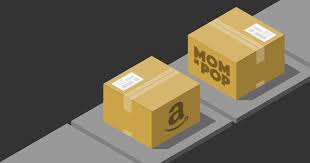
 

Do we really want Amazon to win at everything? It is the time of convenience – and of non-stop hacking into everything.   Consider these 41 hacks (through October 2017!) in health care.  And these 791 in banking (through July, 2017!). And then there’s Equifax – 143 million accounts, established presumably to protect, not misuse, your social security data.  And what’s the worst that can happen? Identity theft – costing consumers $16 billion in 2016.   Yet consumers trust Amazon, sellers not so much.  And they trust both Amazon and Walmart as possible providers of drone deliveries, with only 41 percent concerned about air traffic safety – presumably fear of too many drones in the air – as their hot food is delivered.  But the drone, presumably would drop off the food outside the home. And Amazon has filed patents on drone delivery. What’s next?  Deliveries inside the home? Uh, yes. As with self-driving cars, media hype combined with consumer naiveté are, as always, regrettable enablers.



from Tips For Aging In Place https://www.ageinplacetech.com/blog/four-blog-posts-and-concerns-you-may-have-missed

Sunday, July 1, 2018

Aging in Place Technology – Five Blog Posts from June 2018

In a short month, heard lots about caregiving and hearing.  You have 'conversed' with an older person who cannot hear well without hearing aids but owns an expensive pair which are highly adjustable. But they don't put them in, or lost one of them and not replaced it, even though the VA will pay for it. These individuals may ask you a question, but they don’t wait for an answer they can’t hear well. And so they go on – talking about themselves  and assuming that’s fine at your end of the 'dialogue'   They have families who become irritated with them; they spend a great deal of time alone.  Then one day, they become part of an equation – those with hearing loss are at greater risk of developing dementia.   Sigh.  Here are four blog posts from June:

Four technology categories to remotely monitor a caregiver. The boom in home care has side effects -- turnover and risk. We want to trust home care workers with aging parents.  After all, most cannot afford private pay assisted living – which can exceed $3000/month in most locations – and assisted living occupancy is projected to be flat -- likely because people see the cost and defer move-in. Given expanding life expectancies at age 65 – an average of 20 more years for men and more for women, the possibility of ‘aging in place’ in a private home may be growing.  As a result, the demand for private home care will grow, but so will the costs – especially for finding workers willing to do this difficult work for low pay.

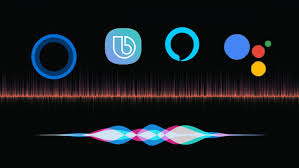
Voice First in Senior Living -- What's Happened and What's Next?  Senior Living organizations are eager to try new technology.  Over the years, consider the pilots of Rendever (virtual reality) at Brookdale, Benchmark’s pilot of Google Home and Samsung tablets, or  CarePredict in LifeWell facilities – just a few of the many. Some pilots are even documented in the form of case studies – about what worked – or what might not have worked.  Pilots are typically newsworthy at their start. And they may produce a list of lessons learned upon completion – or a set of considerations for future pilots. So where does Voice First technology fit into the senior living equation?

Narrowing the price gap between hearing aids and PSAPs.  The hearing aid industry offers pricey hearing aids for people with ‘defined’ hearing loss.  The FDA wants you to understand that it regulates hearing aids – which it defines as helping the medical condition of hearing loss. The FDA then observes that Personal Sound Amplification Products (PSAPs) are “sound amplifiers for consumers with no hearing loss who want to make environmental sounds louder for recreational use.“ Recreational? Hearing aids that they do regulate are now made by a small number of companies and are sold with audiologist services for $1000 up to $4000 per device – most people need two – they have a lifespan of up to 7 years.   That price includes a hearing test, fitting, initial batteries and more.

Ten Technologies from the Silicon Valley Boomer Venture Summit.  Two competitions, both sets of presentations in one day. The first five are finalists in the 2018 Silicon Valley Boomer Venture Summit Business Plan competition. The Business Plan Competition features companies pitching their ideas to a diverse panel of judges for feedback, funding and a $10,000 prize.  The second five are finalists in the AARP Innovation Labs Pitch Competition for companies focused on providing peace of mind to family caregivers through the use of VR, AI and other disruptive technologies. The winning team will go on to the AARP Innovation Pitch Event in Washington, DC, in October of 2018.

Now Hear This: uncorrected hearing loss isolates and harms older adults.   One in three between age 65 and 74 has hearing loss, and nearly half of people aged 75+ have some significant level of hearing loss.  Note that hearing loss has been linked to dementia and to social isolation – and that in turn has been connected to poorer health outcomes.  Furthermore, wearing hearing aids has been linked to fewer hospital visits. According to studies, among adults aged 70 and older with hearing loss who could benefit from hearing aids, fewer than one in five (20 percent) has ever used them. Why such a small percentage? Experts believe that it is a combination of denial, belief that hearing loss is not severe enough, perceived stigma associated with wearing hearing aids, and a perception that they cost too much.

[Note: For those who want to see the original blog post (and all of the other site content), please visit www.ageinplacetech.com.]


from Tips For Aging In Place https://www.ageinplacetech.com/blog/aging-place-technology-five-blog-posts-june-2018

Tuesday, June 12, 2018

Narrowing the price gap between hearing aids and PSAPs

The hearing aid industry offers pricey hearing aids for people with ‘defined’ hearing loss.  The FDA wants you to understand that it regulates hearing aids – which it defines as helping the medical condition of hearing loss. The FDA then observes “sound amplifiers for consumers with no hearing loss who want to make environmental sounds louder for recreational use.“ Recreational ? Hearing aids that they do regulate are now made by a small number of companies and are sold with audiologist services for $1000 up to $4000 per device – most people need two – and have a lifespan of up to 7 years.   That price includes a hearing test, fitting, initial batteries and more.

Why do hearing aids cost so much? According to hearing industry experts, the price differential is based on the inclusion of audiologist services. And in a few other words from AARP, very few companies control the bulk of the market.  And although it has been recommended to decouple the product from services, so far, that hasn’t happened, perhaps related to the efforts of those few companies. Retailers like Walmart, BestBuy, and Costco all sell hearing aids – coupled with Costco-provided audiologist -services – Costco’s site offers its own branded for $1600 per pair.

As hearing aid prices are disrupted, the PSAP and other hearables disrupt the industry.  If Costco is pushing the hearing aid industry price down, at some point that price meets the upper end of the PSAP market of $500/pair of PSAP maker like Clarity, SoundWorld Solutions or Tweak Focus. The underlying technology in hearing aids and that of Personal Sound Amplification Products (PSAPs) is not different. The go-to-market channels, however, are quite different.  Retail stores, online websites offer PSAPs for buyers who adjust the device themselves – the which the FDA calls the ‘audio version of reading glasses.’ And Consumer Reports calls them ‘hearing helpers.’ But are they really? Or are they hearing aids in disguise because the FDA does not currently regulate them? Maybe they are hearing aids that you adjust yourself? How do they sync up with the more recently introduced 'hearables' which encompass a plethora of firms?

Consider that the terminology dance must mystify consumers.  Note that hearing aids are not covered by Medicare – nor are PSAPs. Note that one in three between age 65 and 74 has hearing loss and nearly half of the 75+ have some level of hearing loss. Note that hearing loss has been linked to dementia, to social isolation – which has been linked to poorer health outcomes.  (Further, wearing hearing aids has been linked to fewer hospital visits.)

Cut to the chase – the FDA should get out of the consumer’s way. Regardless of what it is called, improving ability to hear among older adults is a health and quality-of-life positive, and could be related to lowering healthcare costs.  The companies in this industry (Hearing Aid and PSAP) need to help the FDA help the older consumer who lacks either device. Decouple the product from the services, allow consumers to make their own choice of where to buy and with what service they need, and track price and competition – and measure the numbers of people who report improvement in quality of life, health status, and social engagement.

category tags: 


from Tips For Aging In Place https://www.ageinplacetech.com/blog/narrowing-price-gap-between-hearing-aids-and-psaps

Tuesday, June 5, 2018

Voice First in Senior Living -- What's Happened and What's Next?

Senior Living organizations are eager to try new technology.  Over the years, consider the pilots of Rendever (virtual reality) at Brookdale, Benchmark’s pilot of Google Home and Samsung tablets, or  CarePredict in LifeWell facilities – just a few of the many. Some pilots are even documented in the form of case studies – about what worked – or what might not have worked.  Pilots are typically newsworthy at their start. And they may produce a list of lessons learned upon completion – or a set of considerations for future pilots. So where does Voice First technology fit into the senior living equation?

The newest of technologies – voice first – sparks interest.  Credit Front Porch for being one of the first in voice first – piloting and writing up the results – empowering the participants to both speak requests and control their environment with smart home commands.  But pilots of Voice First technologies are widespread today – see Commonwealth Care Alliance and Orbita.  AARP Foundation, and Libertana Home Health, WebMD. or Answers by Cigna. And new entrants are emerging to tackle Voice First in healthcare – see Suki’s recent raise of $20 million – perhaps hoping to beat Amazon to the behemoth’s own healthcare punch.

Senior living companies have launched Voice First pilots and projects.  Carlsbad by the Sea (including smart home features), The Branches of North Attleboro (including smart home), and Park Creek Independent Living (pilot just launched – including a free device).  There are numerous others – some with press releases like the Park Creek one, or noted in senior living publications, as with Front Porch. Expect more pilots of Google Home, Samsung SmartThings and wearables that can respond to voice command.

Senior living - please report successes and lessons learned.  For senior living organizations, many questions, not so many answers just yet. Who buys the device – the resident or the community on behalf of the resident? How are they managed and deployed – by an IT staffer? Remotely set up or in person?  WiFi upgraded before deployment?  Who receives notifications from smart home technology?  Are concierge services part of the plan – initiated at the front desk?  Or in apartment? Integrated with other senior living technology? And is Voice First now a mandatory feature of resident engagement solutions?  If not now, then by when and with what caveats? What are the biggest concerns, for example, might they be protection of user security and privacy?


from Tips For Aging In Place https://www.ageinplacetech.com/blog/voice-first-senior-living-whats-happened-and-whats-next

Friday, June 1, 2018

Four technology categories to remotely monitor a paid caregiver

The boom in home care has side effects -- turnover and risk. We want to trust home care workers with aging parents.  After all, most cannot afford private pay assisted living – which can exceed $3000/month in most locations – and assisted living occupancy is projected to be flat -- likely because people see the cost and defer move-in. Given expanding life expectancies at age 65 – an average of 20 more years for men and more for women, the possibility of ‘aging in place’ in a private home may be growing.  As a result, the demand for private home care will grow, but so will the costs – especially for finding workers willing to do this difficult work for low pay. As of 2017, median home care turnover was 66.7% (compared to 30% for CNAs in assisted living).  With so many workers coming and going, especially for care recipients with the most taxing care requirements, what technologies may assist families and agency management for monitoring care?

Cameras.  It is possible that having an in-home security camera can deter issues with home care aides if the aide knows that the camera is there. In New Jersey, a law called "Safe Care Cam", the first in the US, enables family members to borrow a camera for free for 30 days if they suspect abuse.  Home security cameras and security systems (which have cameras) can enable both monitoring and the possibility of a two-way audio conversation with the worker. For those who want to monitor without a caregiver knowing, the camera could be mounted inside an alarm clock or a smoke detector.  

Motion sensors.  These low-cost items can detect movement and alert whoever is monitoring – as well as be part of a larger ‘smart home’ solution.  These technologies can include ‘bed exit’ alerts as well as fall detection – useful in circumstances when the care recipient is left alone at the end of a day or for a period of time.  Fall detection, for example, is increasingly likely to be part of a Personal Emergency Response System (PERS) offering – or medical alert market. Either way, detection of motion (or absence of motion) via well-placed sensors with well-placed sensors can be important in monitoring whether a worker is paying attention to care.

Voice reminders and voice ‘drop-in.’  A growing number of families may be willing to use a Voice First technology – like a smart speaker -- for communicating with in-home seniors or caregivers. This might mean setting up an Amazon Echo (Dot or Show) for in-home use.  In those cases where an Amazon device is at two locations, one person can 'drop in' to check on another.  It is feasible to integrate a calendar of reminders for paid workers, for example, a schedule, to please give a medication at a certain time.  This can be done with the Echo line or the Google Home/Google Assistant environment.

Electronic visit verification (EVV).  2018 is the year of the electronic visit verification, subject to compliance with a CMS mandate by January 2019. EVV answers the key agency supervision question -- did the worker arrive it at the appropriate place and at the right time to provide care? This technology will be commonplace, despite efforts to delay making it mandatory, in situations in which a service is reimbursed by government. Because agencies have a mix of reimbursed and private pay business, plus struggling with high turnover among workers, private pay home care work is likely to be tracked with EVV technology -- whether or not it is subject to the mandate.


from Tips For Aging In Place https://www.ageinplacetech.com/blog/four-technology-categories-remotely-monitor-paid-caregiver

Wednesday, May 30, 2018

Health-Care tech for seniors – not well served by the Wall Street Journal

Skip the tech – listen to the experts interviewed – first robots.  The good news – this week’s Health Care Technology supplement transcended the limits of doctors and hospitals – and dabbled in the dilemmas of elder care – included technology to assist those with dementia and mitigate loneliness.   Another in a long line of ‘robots and chatbots look after the elderly,’ with promotions of those oft-promoted Care.coach and ElliQ, adding Catalia Health’s cute Mabu. These are worthy experiments – and not wanting to be left behind, there are always health organizations eager to see what the fuss is about. Says USC researcher, Maja Mataric: "Robots give patients the illusion of having a physical companion…it isn’t actually very hard to project empathy (Mabu)...Empathy is what you do, not what you feel."   Really?  How comforting.

On to dementia – those assists from technology – starting with the smart home.  So the tech like home sensors, smart phone apps, tablets, smart pill boxes – aim in this article to help a person living independently (presumably alone).  There’s a sizable graphic from the University of Montreal that shows the placement of smart sensors in a home to track the movements of a person with dementia.  Possibilities? Says Dr. P. Murali Doraiswamy from Duke: "Tech has the potential to help preserve independence…Ultimately we want nursing homes to disappear. We want people to live peacefully in their own home."   But says Dr. Jeffrey Kaye of ORCATECH, "The reality is the evidence that any of this helps or works is very thin."  Okay.

Keeping in touch – smart phones and tablets.  Research often reinforces the utility of technology already on the market and applied to the topic.  Consider that a British consortium is testing whether a smart phone app that launches several times per day and asks how a person is doing. Dr. Martin Orell, head of the project: "The goal is to examine not just what people are doing, but how they are coping." And in Amsterdam, tech that reminds people about which day it is helps to better orient them in the present and keep in touch with relatives. "We must be cautious about the role of technology," says Dr. Melland in Amsterdam, because "often a caregiver still may be needed to help the patient use it."   Yes, and also to provide care.

The problems, the tech, the pioneering university researchers?  Sadly, nothing has changed -- just the names of the university programs.  As for the categories, the tech in this article may be useful for the alert elderly and/or their in-home caregivers. But nursing homes, locked units in assisted living – they will continue to exist, despite Dr. Doraiswamy’s hope. Why? None of the tech referencing dementia care tackles the disorientation, wandering and self-care decline of actual dementia. Medication dispensing tech has been around forever – and must be managed by someone who knows what the dosages should be.  Meanwhile, there are commercially available offerings (no research university needed) to manage a smart home, monitor and manage meds, issue reminders, and even provide in-home social interaction through a tablet, a smartphone, or even by speaking and playing music.   


from Tips For Aging In Place https://www.ageinplacetech.com/blog/health-care-tech-seniors-not-well-served-wall-street-journal

Tuesday, May 15, 2018

We are the guinea pigs in cars and online

Too much road noise, no self-driving information.  So how safe are self-driving cars for us, those pesky consumers who are also the victims of this tech for tech's sake?  Ask yourself – how would you know? Even the NTSB doesn’t want you to know details of accidents involving Tesla’s Autopilot.  Let’s remember the so-called problem being hustled into the market -- to reduce deaths from auto accidents. They are astonishingly low already, according to a Rand study, at 1 per 100 million miles traveled. According to the Wall Street Journal article, Tesla promised to release safety data on its self-driving tech regularly starting next quarter, though they have not said what sort of data and what could be gleaned from it -- in advance of another series (see link) of crashes.

Despite media exposure, Facebook is opaque. Facebook suspended 200 apps today that may have collected boatloads of user data.  What apps?  Oh, well, Facebook won’t say.  The inability to leave (or de-activate) Facebook following the so-called scandal has been as much about what others do -- or don’t. But have people really left?  Or have they just read websites telling them how to leave?  Even though half of people in a recent survey said they might leave, it’s still very popular among all age groups.  Not unreasonably, that could be because, as Mark Zuckerberg observes, it has no real competition.  And no, Instagram doesn’t count – since that is also a Facebook business.  Does it matter who deletes?  As the earnings announcement shows – so far, not really.

Digital health tech for providers and consumers, current status is bleak. The hype masks your experience at the doctor’s office, where the waiting room is likely still clipboard-intensive, with multiple pages of profile questions -- after all these years. We may have online access to our tests results – but only those that are from the same system. And the adoption of digital health by providers – 44 % non-adoption in hospitals.  As for consumers, 82% do not use telehealth, explaining why patient depart hospitals with CDs of the medical record.  Could it be because there is no interoperability between health systems used by doctors and multiple hospital systems?  Now consider those older adults with dementia, rushed to an emergency room and note the quantified poorer care they are likely to receive.     

Online banking – the service ledger for consumers is still out of balance.  As banks pick up the pace of branch closures, surprise, people still need to periodically visit a bank. More to the point, they may WANT to visit the bank. Watch workers line up on Friday at a bank to cash their paychecks. And no, they are not doing online banking photo deposits.  For those who note their branches are disappearing, there may be hope.  Millennials like going to banks – so some banks are opening more of them.  Note the trend towards Do-It-Yourself Fraud controls – turning off your credit or debit card from your phone. Will fraudsters buy in to this, uh, trend?   


from Tips For Aging In Place https://www.ageinplacetech.com/blog/we-are-guinea-pigs-cars-and-online