
Thursday, April 12, 2018

Older adults -- worry more about data privacy and profiles

The irony, the irony – everyone saw Europe’s data privacy initiatives.  Why has this taken so long here? In a word – lobbying. The congressional hearing droned on, and Mark Zuckerberg tried so hard not to sound condescending towards his techno-light questioners about the so-called ‘Facebook Scandal.’ Which could have been the Google scandal, the Twitter scandal, or the Amazon scandal -- consolidation of industry players and using the data to sell them (or make ads ‘more effective’) or as with Amazon, sell them more stuff. The real scandal? Not the Cambridge Analytica role, which didn’t exactly sneak around in the long-time and paid analysis of Facebook data. The real scandal might be last year's $30 million of lobbying spent to avoid controls (and user protection) actions like those considered and in process in Europe.

What cannot be controlled - market domination. Unless the federal government gets more involved in oversight of acquisitions, useful software companies or services are perpetually driven out of business when the big guys swallow up the competition -- What’s App, Instagram – did the government even peep when those deals happened? Or when they form into near-monopolies like Amazon.  At the very most polite, a ‘smaller group of players’ (see proposed Walmart and Humana). Remember that Google gets 78% of all search ad dollars.  That meets the definition of ‘dominant’ if not quite a monopoly – what happens when it is 90% or 95% -- is that a monopoly?  At that point, and when all other search ad dollars have evaporated, that is an Amazon moment – think book stores and the destruction of nationwide retail stores, say, in malls? Or auto parts?  

The favorite rejoinder – we brought this consolidation, uh, monopoly, on ourselves.  We like convenience of ‘qualifying for free shipping’.  Really?  We hate being in retail stores – thought that may not apply to all -- not millennials and not baby boomers. We like that there is only one check-out process, no matter who the behind-the-scenes seller is – and that always works out for the seller – though maybe not so much.  And that one-click ordering, we like that, though -- accidents happen.  Meanwhile, Amazon knows our profile (so that we can shop).  Facebook and Google know our profile in much more personal depth – so that we can…what exactly?  And consider how tools to manage these profiles, enabling shutting off default settings, have emerged long after the profile was created and the data was provided to…whom?

Older adults will be increasingly vulnerable to defaults and privacy hacks -- not just AARP-monitored scams.  Protecting our data privacy in dominant tools like Facebook and its Instagram (new process introduced April 12, 2018), Google, Twitter, and Youtube -- many days late and millions of dollars short.  As we encourage older adults to go online and into tools that involve family photo and video sharing, what else is being shared?  And how would you know there was a problem with this sharing by default -- unless the press caught wind of it, whether it is about Cambridge Analytica or European Union initiatives, or AARP posted about it on March 28, 2018?  Who is watching out for older adults in the online world of default sharing -- and train in the use of privacy hubs as they emerge?



from Tips For Aging In Place https://www.ageinplacetech.com/blog/older-adults-worry-more-about-data-privacy-and-profiles


Thursday, April 5, 2018

Aging in Place Technology – Four Blog posts from March 2018

The tech ideas of March -- change incremental or disruptive.   March marked the annual American Society on Aging conference in San Francisco – where Continuing Education Credits (CEUs) are obtained for multiple social and service roles that serve older adults.  The purpose was unchanged – and the limited representation of tech in the exhibit hall  may hint at the peripheral role that technology use continues to play in these senior-focused jobs, despite the tech disruption this past year of voice first technology, or the availability of cheaper/smaller wearables and offerings for the smart home.  The four blog posts from March are:

2018 Technology Market Overview updated and published. Technology and tech-enabled services matter for older adults. The marketplace for technology to assist aging adults in the Longevity Economy is expected to grow to more than $30 billion in the next few years, according to the updated report by Aging in Place Technology Watch, more likely to be based on customization of standard software, using existing platforms than creation of senior-specific products. The report provides predictions about key technology trends for 2018 and beyond. Families, caregivers, and seniors will acquire new tech-enabled services that improve the quality of their lives. The 100-million-strong 50+ market is increasingly aware of technology alternatives -- and providers know it.  Read more.

Do older adults have good reasons to resist technology change? Surveys affirm increasing tech use among older adults, but for some, not so fast. Whether it is new data from Pew or AARP, some older adults refuse or are unable to use newer technologies, whether it is smartphones, online banking services, or (perhaps especially) social media.  Maybe they prefer feature phones (450 million shipped in 2017!) They may not be interested in being the first to test a new gadget or service.  Maybe they can’t get the packaging for a wearable opened without a hacksaw.  For that matter, how many of us are storing a pliers in their kitchen for vacuum-sealed containers?  But the tech of the day is particularly an anathema to a number of people, whether it is due to costly Internet plans, pricey and fragile smartphones, or hacker-improved, uh, enriched social media. Read more.

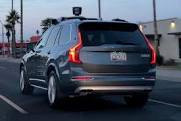
Self-driving cars – Not yet for older adults or anyone else.  What problems are self-driving cars supposed to address? Meanwhile over in Congress and ‘government oversight’, self-driving car regulations were loosened in July, enabling federal safety regulations to override those of states. Why? Because ‘boosting the industry is vital to car safety.’ And why is that? Because of the volume of motor vehicle accidents and fatalities.  So let’s understand this in a data context – there were 268 million vehicles registered in the US as of 2016.  Cars are kept for 11.6 years.  Older drivers like to drive their cars, despite the oft-repeated justification for self-driving cars is to ferry older people around. Lobbying for looser regulations has reached a new and quite convivial pitch – note the fun formation of a ‘supergroup’ of car company and tech lobbyists, supported by the mantra of reduced accidents and greater safety.  Traffic deaths are a 'public health crisis that cannot be tolerated.'  Read more.

Six offerings from the What’s Next Boomer Business Summit. The 2018 Boomer Business Summit, now in its 15th year, built this year’s conference as the ‘Blueprint for the Longevity Economy’. That blueprint depends on the enthusiasm and foresight of innovators and leaders of technology companies that focus on the boomer-senior market, increasingly offering Voice First interfaces to new capabilities. Here are Six offerings from companies whose founders are passionate about serving the needs of older adults, those who care for them and those who serve them. All of the material included here is from the firms, listed in alphabetical order. Read more.


from Tips For Aging In Place https://www.ageinplacetech.com/blog/aging-place-technology-four-blog-posts-march-2018

Thursday, March 29, 2018

Six Offerings from 2018 What’s Next Business Boomer Summit

TThe 2018 Boomer Business Summit, now in its 15th year, built this year’s conference as the ‘Blueprint for the Longevity Economy’. That blueprint depends on the enthusiasm and foresight of innovators and leaders of technology companies that focus on the boomer-senior market, increasingly offering Voice First interfaces to new capabilities. Here are Six offerings from companies whose founders are passionate about serving the needs of older adults, those who care for them and those who serve them. All of the material included here is from the firms, listed in alphabetical order.

Kanega Watch. "Patent-pending battery system in the band, you never have to take your watch off to charge – and unlike Apple watch or Samsung Gear, we don’t require a smart phone (because it’s built in). We combine cellular, Wi-Fi, GPS, BLE (for hearing aids and telemedicine devices), an accelerometer for automatic fall detection, and continuous speech to provide an active medical alert that works anywhere, along with data-driven artificial intelligence that learns the wearer’s lifestyle (think “NEST for people”) to provide predictive, preemptive support." Voice First. In Beta. Learn more at UnaliWear.

LifePod. "LifePod’s patent-pending innovations go beyond the capabilities of popular smart speakers to create an easy-to-use, interactive voice service optimized for seniors as they age-in-place and their caregivers, offering unique, two-way voice architecture and service that will initiate dialogs with senior users based on caregiver-configured menus. Powered by advanced AI and machine-learning to bring new insights into a senior user’s condition, daily activities and behavioral trends." Voice First. In Beta.  Learn more at LifePod.

Livpact. "Personalized Care Engagement Platform provides a robust, yet simple way to facilitate coordination, communication, monitoring and service provision for caregivers and their loved ones directly from their phone, tablet or computer. A Personal Care Team - comprised of primary and secondary caregivers, family and friends and members of the clinical team - is a central feature of this network.  For coordination and communication among this team, we offer role-based access and voice-enabled features powered by Alexa and Google Home.” Platform. In Market. Learn more at Livpact.

MyNotifi. "A medical alert wristband that notifies family and friends automatically via an easy-to-use smartphone app if your loved one falls. They can keep living the active life they love. You can rest easy knowing you'll be instantly notified if they ever need your help. The MyNotifi app is preloaded with several mobility exercises to increase strength and improve range of motion. iOS and Android. Sends reminders when battery charge is needed." Wearable. In Market. Learn more at MyNotifi.

Marvee. "Founded by tech professionals and caregivers focused on bringing the best voice-designed solutions to the over-50 population and the communities that surround and serve them. The AskMarvee capability includes Morning Beacon, Social Visit, Call Me, and Family News.  The company also offers a ‘Community Platform’ for turning paper into voice content bringing community news, daily menus, activity calendars, and surveys to community members upon voice requests and provides Voice First Consulting and training for communities and businesses." Voice First. In Market. Learn more at Marvee.

Onist. "Platform that securely connects family members and their existing professionals around a complete view of their net worth including important financial documents. Platform multi-generational family financial management, connecting families and storing important financial documents. For professionals, Onist connect a firm to not just one client, but their entire household from spouses to the other generations and the other professionals they work with. Identify and mitigate the risk of losing clients across generations." In market. Learn more at Onist.


from Tips For Aging In Place https://www.ageinplacetech.com/blog/six-offerings-2018-what-s-next-business-boomer-summit

Saturday, March 24, 2018

Self-driving cars - not yet for older adults or anyone else

In a taxi in DC – the driver wends his way around buses and pedestrians.  It’s the day after the self-driving car killed a pedestrian. The next day, you can find scores of link references to a police comment that the car was likely not at fault though no investigation has completed – or even been started. In another tech publication (“Big Think – your daily microdose of genius”), you can read that in over 1.5 million miles of testing, one year ago was the first time the car had been at fault when it crashed with a bus. Really? How does the writer know this? Because Google says it was a ‘misunderstanding in the car’s software and from now on, the car will understand that large vehicles and buses will be less likely to yield.’

What problems are self-driving cars supposed to address? Meanwhile over in Congress and ‘government oversight’, self-driving car regulations were loosened in July, enabling federal safety regulations to override those of states. Why? Because ‘boosting the industry is vital to car safety.’ And why is that? Because of the volume of motor vehicle accidents and fatalities.  So let’s understand this in a data context – there were 268 million vehicles registered in the US as of 2016.  Cars are kept for 11.6 years.  Older drivers like to drive their cars, despite the oft-repeated justification for self-driving cars is to ferry older people around. Lobbying for looser regulations has reached a new and quite convivial pitch – note the fun formation of a ‘supergroup’ of car company and tech lobbyists, supported by the mantra of reduced accidents and greater safety.  Traffic deaths are a 'public health crisis that cannot be tolerated.'  But consider (40,000) traffic deaths (texting, distracted driving, no seat belts) as compared to the number of cars (268 million) in the US. Now imagine thousands or millions of self-driving cars, all dependent on software trained to understand and anticipate obstacles of every conceivable type, never mind road conditions, weather, or pedestrians moving outside of the crosswalk.

Meanwhile the taxi driver is afraid that his job will be eliminated.  He does not see why his livelihood, which is already in jeopardy from Uber, should be further jeopardized because Googled upstarts say they can make it so.  Uber drivers are unhappy about their pay, but see how the company disputes an MIT study of how low the pay really is – the author back-pedaled, sheepishly admitting that many have 'other jobs.' Well, that takes care of that, right?  And of course, ride sharing services like Uber and Lyft reduce traffic in big cities, right? Not exactly – see data from New York. The consumer has loved the convenience of Uber and its app – which is where this all started -- so too will self-driving hype fit into the media-ready recipe of convenience (no need to own a car!), sprinkled with media-fueled repetition about bad human drivers and accidents. By the way, does media hype exist if the press was not briefed by firms? Just asking.

In the click-bait of technology myth-making, what about those eliminated drivers?  Are they re-trained for other industries? Do they transition into home care, home health care, or senior living, which can’t find enough workers? Not a chance. When trucks are self-driving, where do those drivers go? Into health care? Who really thinks big about the impact of automation on a workforce or online purchasing on a retail economy? Of course we all love tech-enabled progress. Think Facebook, after all. But will the click-driven media occasionally observe that what may look like progress is a nightmare – and not just around the corner, but on the streets and sidewalks where you live.


from Tips For Aging In Place https://www.ageinplacetech.com/blog/self-driving-cars-not-yet-older-adults-or-anyone-else

Wednesday, March 21, 2018

Self-driving cars – a study in hyped inappropriate technology

In a taxi in DC – the driver wends his way around buses and pedestrians.  It’s the day after the self-driving car killed a pedestrian. The next day, you can find scores of link references to a police comment that the car was likely not at fault though no investigation has completed – or even been started. In another tech publication (“Big Think – your daily microdose of genius”), you can read that in over 1.5 million miles of testing, one year ago was the first time the car had been at fault when it crashed with a bus. Really? How does the writer know this? Because Google says it was a ‘misunderstanding in the car’s software and from now on, the car will understand that large vehicles and buses will be less likely to yield.’

What problems are self-driving cars supposed to address? Meanwhile over in Congress and ‘government oversight’, self-driving car regulations were loosened in July, enabling federal safety regulations to override those of states. Why? Because ‘boosting the industry is vital to car safety.’ And why is that? Because of the volume of motor vehicle accidents and fatalities.  So let’s understand this in a data context – there were 268 million vehicles registered in the US as of 2016.  Cars are kept for 11.6 years.  Older drivers like to drive their cars, even as an oft-repeated justification for self-driving cars is to ferry older people around. Lobbying for looser regulations has reached a new and quite convivial pitch – note the fun formation of a ‘supergroup’ of car company and tech lobbyists, supported by the mantra of reduced accidents and greater safety.  Traffic deaths are a 'public health crisis that cannot be tolerated.'  But consider (40,000) traffic deaths (texting, distracted driving, no seat belts) as compared to the number of cars (268 million) in the US. Now imagine thousands or millions of self-driving cars, all dependent on software trained to understand and anticipate obstacles of every conceivable type, never mind road conditions, weather, or pedestrians moving outside of the crosswalk.

Meanwhile the taxi driver is afraid that his job will be eliminated.  He does not see why his livelihood, which is already in jeopardy from Uber, should be further jeopardized because Googled upstarts say they can make it so.  Uber drivers are unhappy about their pay, but see how the company disputes an MIT study of how low the pay really is – the author back-pedaled, sheepishly admitting that many have 'other jobs.' Well, that takes care of that, right?  And of course, ride sharing services like Uber and Lyft reduce traffic in big cities, right? Not exactly – see data from New York. The consumer has loved the convenience of Uber and its app – which is where this all started -- so too will self-driving hype fit into the media-ready recipe of convenience (no need to own a car!), sprinkled with media-fueled repetition about bad human drivers and accidents. By the way, does media hype exist if the press was not briefed by firms? Just asking.

In the click-bait of technology myth-making, what about those eliminated drivers?  Are they re-trained for other industries? Do they transition into home care, home health care, or senior living, which can’t find enough workers? Not a chance. When trucks are self-driving, where do those drivers go? Into health care? Who really thinks big about the impact of automation on a workforce or online purchasing on a retail economy? Of course we all love tech-enabled progress. Think Facebook, after all. But will the click-driven media occasionally observe that what may look like progress is a nightmare – and not just around the corner, but on the streets and sidewalks where you live.


from Tips For Aging In Place https://www.ageinplacetech.com/blog/self-driving-cars-study-hyped-inappropriate-technology

Wednesday, March 14, 2018

Do older adults have good reasons to resist technology change?

Surveys affirm increasing tech use among older adults, but for some, not so fast. Whether it is new data from Pew or AARP, some older adults refuse or are unable to use newer technologies, whether it is smartphones, online banking services, or (perhaps especially) social media.  Maybe they prefer clamshell phones (450 million shipped in 2017!) They may not be interested in being the first to test a new gadget or service.  Maybe they can’t get the packaging for a wearable opened without a hacksaw.  For that matter, how many of us are storing a pliers in their kitchen for vacuum-sealed containers?  But the tech of the day is particularly an anathema to a number of people, whether it is due to costly Internet plans, pricey and fragile smartphones, or hacker-improved, uh, enriched social media.

Older adults worry about losing the social aspects of in-person transactions.  In the small but compelling study from the UK, titled appropriately 'The Wisdom of Older Technology (Non) Users', several cited valid concerns: fear of getting things wrong, the burden to become an ‘expert’ (as with use of product comparison websites), security concerns (like Equifax), and a legitimate worry that online shopping takes business away from local shops.  There is plenty of media mention about social isolation and health of older adults these days, and suggestions about ways to mitigate the issue, generally suggesting visits or calls. the direct relationship between technology and mitigating social isolation still seems tenuous.  In fact, for young people, tools like Facebook may worsen the problem.

What’s to be done about boosting in-person interactions – supported by technology?  The key insight from the UK study?  Older people want to connect with others – and clearly, the other studies show that it does not occur enough. Secondarily, the role of technology (if present at all) is to help people find ways to connect. Imagine a scenario in which a group of older adults attend a regularly scheduled event, whether it is a senior center that offers lunch, a lecture or concert series in an area populated by older adults, a ride service that brings older adults to medical appointments, a home care company that has multiple clients in the same age range and status, a local college with a life-long learning program of afternoon classes.  Or a neighborhood watch program that notes who is stranded by their geography, whether it is warm or icy. Or a high school program that volunteers with local seniors for credit – and a new career path. Through each of these examples, technology access can be a  persistent side effect.


from Tips For Aging In Place https://www.ageinplacetech.com/blog/do-older-adults-have-good-reasons-resist-technology-change

Monday, March 5, 2018

2018 Market Overview of Technology for Aging in Place published

Technology and tech-enabled services matter for older adults. The marketplace for technology to assist aging adults in the Longevity Economy is expected to grow to more than $30 billion in the next few years, according to the updated report by Aging in Place Technology Watch, more likely to be based on customization of standard software, using existing platforms than creation of senior-specific products. The report provides predictions about key technology trends for 2018 and beyond. Families, caregivers, and seniors will acquire new tech-enabled services that improve the quality of their lives. The 100-million-strong 50+ market is increasingly aware of technology alternatives and providers know it:

Voice-first interfaces will dominate apps and devices.  We are still downloading apps, but that era may end. Instead we will be experimenting with personal assistants or AI-enabled voice first technologies (Siri, Google Home, Amazon Alexa, Cortana) which can act as mini service provider interfaces – find an appointment, a ride, song, a restaurant, a hotel, an airplane seat. Technology survivors may be voice-inappropriate tools for social networking, mapping, camera, and news. And there is a continuing wave of behavior modification apps, which currently seem to come and go with the tides of marketing hype – stop smoking, get moving, avoid too much sun, drink more water. Maybe your doctor will prescribe an app – many Silicon Valley startups folk believe (or hope) this will happen – but doctors are not quite convinced.

Internet of Things (IoT) replaces sensor-based categories.  The sensor-based home monitoring market that crested in 2008 was an early example of the possibilities that evolved later. Nearly a decade later, small sensors and tags, as well as the hubs that can detect and monitor them are becoming mainstream.  This Internet of (smarter) Things, or IoT, encompasses tags to help find things, smart devices like wall plugs, thermostats, light bulbs, and even pet feeders. These can be managed through configurable home hubs from Google, Amazon or Samsung. These voice-first hubs compete to be their own home (and car) control ecosystems.

Niche hardware will fade away – long live software and training.  In 2017, will senior-focused hardware survive accelerating technology change? Yes, if it mitigates a health-related condition (hearing, dexterity or vision loss). Otherwise, we will see software that will make hardware platform choices hidden or irrelevant. Will senior phones and tablets survive the voice-first and software-primarily wave?  Or will seniors choose custom or assistive configurations on a standard phone or tablet? And will tablets (even ones for seniors) be swept aside by ever-larger smartphones? Some will buy specialty devices meant for ease-of-use, but most seniors will be trained to use standard tablets or more likely learn about their smartphones in the store classes or at workshops for standard off-the-shelf products.

Tech-enabled home care pressures traditional homecare providers – or does it?  Can $200 million of VC investment be wrong – or premature?  During 2015-2016, investors begin a swoon for tech-enabled home care providers. However, the first failure occurred almost immediately with the demise of Home Hero. Maybe the hype pushed self-scrutiny within the home care agencies and franchises, those that rely mostly on people to do background checking, staff to match need with worker, and managers to track work. And all are struggling with shortages of workers to do these low-paid jobs. These home care providers may wonder and fret – is 2018 the year they must offer 'tech-enabled' care? What exactly is tech-enabled care? Is there a way to supplement in-person oversight with tracking, camera, or voice technology, delivered by retailers like BestBuy?

"Health Tech" doesn't replace "Digital Health" barely acknowledges aging.  In a recent MobiHealth News webinar, founder Brian Dolan observed that Digital Health as a category was being replaced in 2016 and beyond with the term Health Tech – but that didn't actually happen. The dream of reimbursement for the category, especially remote monitoring, persists as the way to replace institutional technology (and budgets) for hospital/health systems, medical practices, and related IT departments. There is still ambiguity between categories of 'digital health' and so-called Personal Connected Health (including some mention of older adults) when summit titles are coined.

Robotics and virtual reality will continue – as experiments.  The press loves to write about robots and seniors. Still at the anecdote stage, widespread use of care-related robots in the home or in senior living communities has not happened and is not expected for years. Instead, robotic pets are growing in popularity in senior communities and private homes – no care and feeding required, plus the possibility of providing comfort to seniors who feel isolated or may have dementia. During 2017, more senior living communities also experimented with virtual reality.


from Tips For Aging In Place https://www.ageinplacetech.com/blog/2018-market-overview-technology-aging-place-published